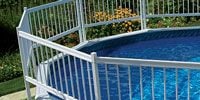
Do I need a fence around my above ground pool?
Author: Brian Lane
Posted In: Above Ground Pools, General
Can Your Above-Ground Pool Wall Also Be Your Safety Barrier?
What the New 2025 ANSI/PHTA Standard Means for Your Pool (And Your Options at ProPools.com)**
If you’re shopping for an above-ground pool, you’ve probably asked yourself: “Do I need a fence too… or can the pool itself help keep my family safe?”
The latest ANSI/PHTA/ICC-4 2025 American National Standard for Aboveground/Onground Residential Swimming Pools answers this with clear, safety-driven guidance — specifically in Section 7.2.3.14 of the standard.
The latest ANSI/PHTA/ICC-4 2025 American National Standard for Aboveground/Onground Residential Swimming Pools answers this with clear, safety-driven guidance — specifically in Section 7.2.3.14 of the standard.
Let’s unpack what that means in everyday terms — and how it connects to your pool, your peace of mind, and the accessory options available right here at ProPools.com.
Why Barriers Matter (Safety First)
Before we dig into the details, it’s important to understand why this standard exists.Swimming pools — even above-ground models — pose real risks if people (particularly small children) can access them unsupervised. That’s why industry authorities work with building codes and safety committees to set standards that help reduce drowning incidents and injuries.
Pool barriers are one of the most basic layers of protection, along with supervision and alarms.
Section 7.2.3.14: When an Above-Ground Pool Wall Can Be a Barrier
Under the new 2025 ANSI/PHTA standard, your above-ground pool’s own wallcan count as part of the required safety barrier — but only if all of the following conditions are met:
1. The Pool Wall’s Bottom Is at Ground Level
For the wall itself to act as a barrier, its base must sit on the ground all the way around the pool.
This ensures there are no gaps under the wall that a child or pet could squeeze through.
2. The Wall Is Tall Enough — at Least 48″ Above Grade
The top of the pool wall must rise at least 48 inches above the ground (measured from the outside). That’s the same 4-foot height you’ll often hear referenced in many building codes and safety recommendations.This height deters young children from simply climbing over it.3. The Wall Meets the Standard’s Specific Barrier Rules
It’s not enough just to look tall. The wall needs to meet the technical barrier requirements laid out in the standard — things like no gaps or openings that would allow a 4-inch sphere to slip through and no footholds that could help a child climb out. These are the same general safety criteria used in pool fencing standards.4. The Manufacturer Says It’s Allowed
This part matters: even if the height and design could meet barrier criteria, the pool’s manufacturer must confirm that the wall is intended and permitted to serve as the pool barrier. ANSI/PHTA states that manufacturers must provide guidance on this.That’s where ProPools.com’s product information helps you decide what’s compliant and what isn’t — especially since not all pools are built the same.
What About Ladders and Steps?
Here’s the safety catch: even if your pool wall qualifies as a barrier, your access points matter.
The standard makes it clear that ladders or steps must be secured, locked, or removed to prevent unauthorized access — unless they are fenced in by a compliant barrier.
And if a ladder is removed or locked, the opening left behind must not allow the passage of a 4-inch sphere — another deterrent for small fingers and toes.
If you do want a ladder that offers this kind of security, check out our selection at https://www.propools.com/subcategory/above-ground-pool-steps-and-ladders/197
These ladders are designed so they can be secured or removed when the pool is not in use — letting your wall barrier do its job.
 Do You Still Want a Fence Around Your Pool?
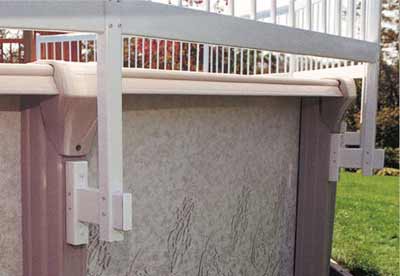
Absolutely — many pool owners choose to add a traditional fence, even if code says the wall can serve as the barrier.
There are several reasons this makes sense:
- Local codes may still require it. Some cities or HOAs mandate full barrier fencing regardless of pool wall height.
- Extra peace of mind. A fence adds a second layer of protection for curious kids or pets.
- Aesthetics and lifestyle. Fenced-in areas can create a backyard retreat — and even offer places to hang decor, plants, or lighting.
Explore a wide range of fencing options at https://www.propools.com/category/fencing/34
From simple panels to decorative options, you can choose something that complements your landscaping and meets your safety goals.
A Real-World Example: How It Works Together
Let’s say you purchase a new 16-foot above-ground pool from ProPools.com. The wall comes out of the box at 52″ tall, and the manufacturer documentation confirms it can serve as a code-compliant barrier when installed per instructions. That means:
- Your wall itself meets the minimum 48″ height requirement.
- If you secure or remove the ladder when not in use (or use a fenced access area), you satisfy the barrier intent.
- You may choose to install a fence anyway — for additional deterrence, privacy, or decorative appeal.
In that situation, the pool itself may serve as your code-compliant barrier — but our fencing options give you the flexibility to double up on safety if you prefer.
Why This Matters for You
Safety and compliance don’t have to be complicated. The 2025 ANSI/PHTA standard helps clarify when a pool wall can be part (or all) of your safety barrier — and what must happen at access points like ladders.
At ProPools.com, we make it easy for you to:
- Choose a pool that qualifies to be used as a barrier when it’s permitted.
- Add ladder options that lock or secure.
- Install fencing to boost safety and satisfy local requirements.
- Shop smart with info that prepares you for inspections and safe installation.
Final Takeaway
An above-ground pool wall can do double duty — serving as both the pool structure and the safety barrier — but only if:
- It’s high enough (48″+ above grade)
- It complies with opening and design rules
- It’s approved by the manufacturer
- Access points like ladders are managed safely
Otherwise, or simply for extra protection, many owners still choose to install a fence.
Whether you’re focused on safety, style, or peace of mind, we’ve got you covered at ProPools.com — from pools to ladders to fencing.